

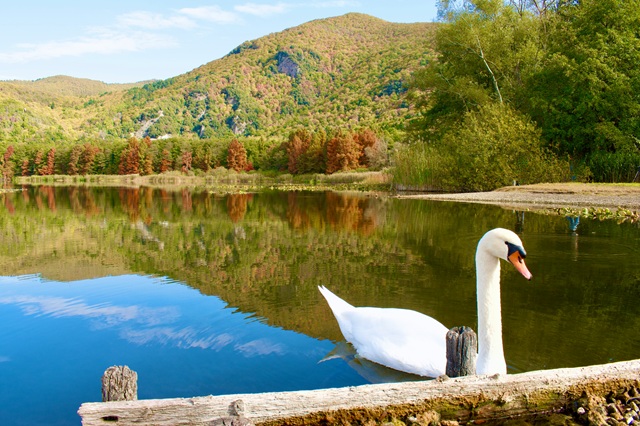
Ai piedi del Monte Vulture, il borgo di Rionero in Vulture in provincia di Potenza è circondato dalla natura che l’ha reso uno dei centri dell’Aglianico del Vulture Doc. Un territorio che ha fatto da sfondo alle lotte dei briganti e alle civiltà che si sono succedute durante la sua lunga storia. Alcune tombe rinvenute nelle località San Francesco, Cappella del Priore e Padulo, dimostrano che il territorio su cui sorge Rionero era abitato sin dal IV secolo a.C., e l’antichità della sua storia è confermata dal ritrovamento di resti di un acquedotto di epoca romana e della villa romana in località Torre degli Embrici. Dopo la caduta dell’Impero Romano, Rionero vide l’arrivo dei normanni, ma divenne anche rifugio di monaci basiliani, i quali vi costruiscono l’Abbazia di San Michele. Quest’ultima venne edificata prima dell’anno Mille sui fianchi dell’antico cratere del Vulture, vulcano spento. La storia di Rionero in Vulture, infine, è strettamente legata alle figure del meridionalista Giustino Fortunato, che fece risorgere l’abitato grazie a interventi antimalarici, la costruzione di un asilo e della stazione ferroviaria, e del brigante Carmine Donatelli detto “Crocco”, entrambi nati in questo paese. Il borgo, infatti, fu uno dei maggiori centri del brigantaggio postunitario, una parte di storia che il Museo del Brigantaggio, nell’ex Grancia di Santa Maria degli Angeli che fungeva da carcere borbonico, vuole custodire e divulgare. Una meta perfetta per curiosi ed emigrati di ritorno che vorrebbero approfondire il passato della cittadina. Il settecentesco Palazzo Giustino Fortunato, il più importante degli edifici signorili della città, è il cuore culturale di Rionero per il nome che porta, per la figura che ricorda e perché in esso ha sede la biblioteca comunale. Imperdibile il Museo di storia naturale di Monticchio, una frazione di Rionero in Vulture, che espone le bellezze naturali di un ecosistema ancora intatto come quello del Vulture. Tra le architetture religiose, vanno menzionate la seicentesca Chiesa madre di San Marco Evangelista, la Chiesa del Santissimo Sacramento, la piccola Chiesa di Sant’Antonio Abate con la primitiva ossatura gotica, che sarebbe stata edificata nella prima metà del XIII secolo dai monaci benedettini di Monticchio, la settecentesca Chiesa dell’Annunziata e la Chiesa della Madonna di Laudato, ogni anno meta di pellegrinaggi a partire dal lunedì in Albis. Il legame con la tradizione religiosa è dimostrato dal ciclo dei riti delle Sacre Rappresentazioni nel Vulture-Melfese, che si concludono con la Via Crucis del Sabato Santo. Per l’occasione, gli abitanti partecipano con costumi aderenti al contesto storico in cui è vissuto Gesù, seguendo l’organizzazione della Confraternita di Maria SS. del Monte Carmelo. Partecipare alla festività è il modo perfetto per assaggiare i piatti tipici della tradizione lucana, come lagane e ceci (detto anche “Piatto del Brigante”), ravioli con la ricotta, cavatelli e cime di rapa, acquasale, sanguinaccio, “mustacciuoli”, “calzoncelli” e il già citato Aglianico del Vulture Doc. Per concludere la visita, non resta che pianificare un trekking nelle campagne circostanti, a piedi o a cavallo, seguendo i sentieri dei briganti nella splendida Riserva Naturale Grotticelle.
COME ARRIVARE: Gli aeroporti di riferimento sono a Napoli e Bari. Rionero in Vulture è servito da una propria stazione ferroviaria. In automobile da Roma: prendere A24, prendere A1/E45 in direzione di SS 372 a Caianello, prendere l’uscita Caianello, continuare su SS 372, prendere A16/E842 in direzione di SP 95 a Candela, prendere l’uscita Candela, prendere SS 655 e SS 658 fino a Rionero in Vulture.
ALTRI LUOGHI DA VISITARE: Tra i borghi nelle vicinanze, vale la pena visitare Venosa e Melfi. Da vedere anche le pitture rupestri del Tuppo dei Sassi.
https://www.basilicataturistica.it/territori/rionero-in-vulture/
At the foot of Mount Vulture, the village of Rionero in Vulture in the province of Potenza is surrounded by nature that has made it one of the centers of Aglianico del Vulture DOC. A territory that has been the backdrop to the struggles of brigands and the civilizations that have followed one another during its long history. Some tombs found in the localities of San Francesco, Cappella del Priore and Padulo, show that the territory on which Rionero stands was inhabited since the fourth century BC, and the antiquity of its history is confirmed by the discovery of the remains of an aqueduct from the Roman era and the Roman villa in Torre degli Embrici. After the fall of the Roman Empire, Rionero saw the arrival of the Normans, but it also became a refuge for Basilian monks, who built the Abbey of San Michele there. The latter was built before the year 1000 on the sides of the ancient crater of Vulture, an extinct volcano. Finally, the history of Rionero in Vulture is closely linked to the figures of the southerner Giustino Fortunato, who revived the town through antimalarial interventions, the construction of a kindergarten and a railway station, and the brigand Carmine Donatelli, known as “Crocco”, both born in this town. The village, in fact, was one of the major centers of post-unification brigandage, a part of history that the Museum of Brigandage, in the former Grancia di Santa Maria degli Angeli, which served as a Bourbon prison, wants to preserve and disseminate. A perfect destination for curious and returning emigrants who would like to learn more about the town’s past. The eighteenth-century Palazzo Giustino Fortunato, the most important of the city’s stately buildings, is the cultural heart of Rionero for the name it bears, the figure it recalls, and the municipal library it houses. Not to be missed is the Museum of Natural History of Monticchio, a hamlet of Rionero in Vulture, which showcases the natural beauty of a still-intact ecosystem such as that of the Vulture. Among the religious architectures, we must mention the seventeenth-century Mother Church of San Marco Evangelista, the Church of the Blessed Sacrament, the small Church of Sant’Antonio Abate with the primitive Gothic framework, which would have been built in the first half of the thirteenth century by the Benedictine monks of Monticchio, the eighteenth-century Church of the Annunziata and the Church of the Madonna di Laudato, every year a pilgrimage destination starting from Easter Monday. The link to religious tradition is demonstrated by the cycle of rites for the Sacred Representations in the Vulture-Melfese, which concludes with the Via Crucis on Holy Saturday. For the occasion, the inhabitants participate in costumes that adhere to the historical context in which Jesus lived, following the organization of the Confraternity of Maria SS. del Monte Carmelo. Participating in the festival is the perfect way to taste the typical dishes of the Lucanian tradition, such as lagane and chickpeas (also called “Brigante’s Dish”), ravioli with ricotta, cavatelli and turnip greens, acquasale, black pudding, “mustacciuoli”, “calzoncelli” and the aforementioned Aglianico del Vulture Doc. To conclude the visit, all that remains is to plan a trek in the surrounding countryside, on foot or on horseback, following the paths of the brigands in the splendid Grotticelle Nature Reserve.
HOW TO GET THERE: The reference airports are in Naples and Bari. Rionero in Vulture is served by its own train station. By car from Rome: take A24, take A1/E45 in the direction of SS 372 in Caianello, take the Caianello exit, continue on SS 372, take A16/E842 in the direction of SP 95 in Candela, take the Candela exit, take SS 655 and SS 658 to Rionero in Vulture.
OTHER PLACES TO VISIT: Among the nearby villages, it is worth visiting Venosa and Melfi. Also worth seeing are the cave paintings of Tuppo dei Sassi. https://www.basilicataturistica.it/territori/rionero-in-vulture/