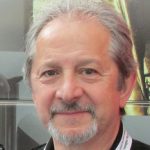



Interview by Maria Teresa De Donato
My dear fellow readers, today I am very happy to introduce you to Part 2 of the interview with my friend and colleague, Author Aldo Villagrossi Crotti, whom many of you already know and who has been my most welcome guest several times.
As I mentioned in the past, Aldo is a multifaceted character who reminds me in part of Albert Einstein and in part of Woody Allen, for reasons I am not going to list here, but that I invite you all to discover by reading my previous articles about him, i.e. Judaism from Biblical Times to Today: The History of a People Always on the Move (Part One), The Girl from Sighet – From Auschwitz to California: A Story of Hope, and Listen to This River, in addition to the review I made of his pleasant and equally smooth book Aunt Quintilla, which will intrigue you, leaving you with a mystery to solve …
With Aldo, the list of potential topics to be discussed is endless. Today, however, inspired also by themes mentioned in the past, we have decided to focus again on Judaism, a subject as ancient as it is complex, especially for those who are not of the Judaic faith and whose knowledge of this people is limited, in fact, to biblical events and to the Holocaust.
We will therefore take advantage of it and consider some aspects that, although mentioned in Part 1 of this interview, we were compelled to postpone due to time constraints.
Enjoy the reading, you all!
L’IDEA MAGAZINE: Hi Aldo, and welcome again to my Blog and Virtual Cultural Salon. It is always a pleasure and an honor to host you.
Aldo Villagrossi Crotti: Hi Teresa, it’s always a pleasure for me too.
L’IDEA MAGAZINE: In Part 1 of this interview, we have considered many interesting aspects of Judaism and concluded that meeting with your statement, “there is a Jewish religion and a Jewish culture. They are two distinct things and must be kept separate to understand them better.”
I would suggest we start right there. Could you, please, elaborate on this concept, perhaps even giving some examples, to help our readers understand it better?
Aldo Villagrossi Crotti: Like all religions, Judaism has “undergone” an evolution. This is already a statement to be considered revolutionary, as religions are generally entrenched in their positions and do not admit variations. Judaism, for example, switched from the oral transmission to the written one precisely as a result of a variation of a sociological and, consequently, cultural nature: the fear of losing the conditions for oral transmission has made the transmission change from oral to written. This happened initially for the Talmud, and I believe I can say it without fear of being denied that this was a leap forward for the Jewish culture even more so than for the religion, as the Talmud was already equipped with a more than efficient diffusion system, such as teaching by means of the word, but was enriched with a further and very important study tool such as reading. It should be noted that writing the Talmud was, and in some extreme cases still is, considered a stretch.
From a cultural point of view, it is inevitable that a people like the Jews, which for millennia have been gathered in well-organized small and medium-sized communities, also have their own, basic culture, which is strengthened and consolidated by the study of its members, but, unfortunately, also from persecutions, since the saying, “what does not kill you, makes you stronger” always applies.
L’IDEA MAGAZINE: A question then arises: By distinguishing a Jewish religion from a Jewish culture, do we perhaps mean that, at least theoretically, a person, whether a Jew or a non-Jew, can embrace the Jewish religion without embracing its culture or embracing its culture without converting to Judaism?
Aldo Villagrossi Crotti: Here we enter a discussion that has many controversial aspects. If you ask for my opinion, I don’t see why there can’t be approaches from one side or the other. They are two very different things, culture, and religion. “Converting to Judaism” is not a rare thing, nor is it extraordinary, just as I have known many Jews who converted to Christianity or other religions, but now that you mention it, I have never met anyone who claimed to be of Jewish culture and did not have any connections with Judaism, but, as for me, I do not see any kind of obstacle in that regard. I am not particularly religious, but the concept of “conversion” is actually a medieval concept, which is linked to the absolutisms typical of religions. The difference between Jews and Christians, in the end, is opaque. Arianism was close to Judaism in many respects, and probably also other Christian movements later repressed by the Inquisition, such as the Cathars. When Catholics in church recite the “Creed”, they substantially declare their belonging to a certain type of religious “current” which is the one that has dominated from the 1500s onwards. So, to answer your question, I don’t see where the problem is, but I know that there might be several problems.
L’IDEA MAGAZINE: By reading what is commonly called the Old (or Old) Testament, the ‘separation’ between the Jewish people and the other nations, the so-called ‘Gentiles’, is instantly clear. The Mosaic Law actually aims, by highlighting the importance of this separation, at the spiritual purity of the people of Israel, that is, Hashem (“the Name”, what non-Jews commonly call Yahweh or Jehovah) does not want that His people worship other gods, they must not commit ‘spiritual fornication’, but rather reserve adoration and total obedience to Him alone.
How and to what extent, assuming it is, has this attitude changed or at least its application in modern times and in what cases are the unions between a Jew (or a Jewess) and a Gentile accepted?
Aldo Villagrossi Crotti: I would say that in the moderate Jewish world they are fully cleared through customs. Just look at the marriages between Jews and Italian Catholics in the USA. Among the absolutists, radicals, orthodox and ultra-orthodox of all religions there will never be the slightest effort to approach anyone who does not think exactly like they do.
L’IDEA MAGAZINE: What exactly is required of the person who converts to Judaism for their request to be accepted and, if this were the case for them, to be able to marry the person born Jewish?
Aldo Villagrossi Crotti: It depends on what kind of environment they fit into. For sure, he has to undergo circumcision and Bar-Mitzvah, after which he just has to respect the rules of the Torah and the Talmud, etc. etc. I know that one of the sons of the Nazi hierarch Schimdt has become a rabbi, Wolfgang Schmidt. Because you must know that it is clearly written: “The sins of the fathers must never fall on the children”. Whoever respects this principle accepts everyone.
L’IDEA MAGAZINE: Last time you explained very well what the Torah, Talmud, Tanakh, are but we left out the Mishnah and the Kabbalah.
Let’s start with the Mishnah …
Aldo Villagrossi Crotti: Well, I was talking about it before. The Mishnah is one of those texts which became texts out of necessity, but which had to remain oral transmission. The origin of the Mishnah is lost in the mists of time, but it was drafted, as a first version, by Rabbi Yahuda HaNasi in 217, during one of the many persecutions that threatened to put the oral transmission at risk. Rabbi Yehuda HaNasi breaks a specific rule but with the intention of keeping alive a cultural part of the Jewish people, and here I refer to what I mentioned earlier. The funny thing is that even today the Mishnah is enunciated orally in an almost chanted form, just to bypass a rule that two thousand years ago was an absolute dogma. Like all Hebrew texts, it is a long list of rules to be respected in order to be “good Jews”, because Judaism consists in respecting the rules rather than being an absolute profession of faith.
L’IDEA MAGAZINE: When we talk about Kabbalah, we are referring – to put it in simple terms – to an esoteric and/or mystical vision of Judaism.
Could you explain to us exactly what it consists in and above all, why, in your opinion, so many people who are of non-Jewish faith are attracted to it?
Aldo Villagrossi Crotti: Because there are so many who don’t understand it, and if you don’t understand something, it becomes mysterious. Kabbalah is the simplest thing that exists on earth, just re-read the Fibonacci sequence, for example. The Pentateuch begins with creation and creation begins with the number 1, Adam. Then another 1, Eve, which become 2 because they come together. Then Abel was born (3) and so on. The numbers fascinate, because in their simplicity they tend to match a thousand different situations, and if you find someone who makes you believe that by measuring the distance between the tips of the pyramids you get the years of Tutankhamun and the exact distance between the Earth and the Moon in the year 2045 well, I don’t find it hard to believe it, but only because numbers can be the result of a thousand uses for they are a simple, basic thing. In the Renaissance there was a strong approach to Kabbalah by the Venetian cultural world and beyond, to the point that an embryo of Christian Kaballah was born, immediately crushed by the inquisition. In my opinion, the greatest Italian exponent of Jewish Kabbalah was Girolamo Soncino, and when it comes to the Christian Kabbalah it was Pico della Mirandola.
L’IDEA MAGAZINE: Just to clarify it: Does the study of Kabbalah require conversion to Judaism or not?
Aldo Villagrossi Crotti: It is part of the Jewish culture, I don’t see any problem.
L’IDEA MAGAZINE: In your book Aunt Quintilla, which I liked very much, I reviewed and whose reading I recommend to everyone, I found a word that I did not know and that I had to go and look for: phylacteries.
Could you, please, explain what they are and what they are for?
Aldo Villagrossi Crotti: They are considered the physical bond with God. A daily gesture is to wrap them on the arm while reciting a series of prayers; they are simply leather straps.
L’IDEA MAGAZINE: Are there other objects that are part of the religion or simply of the Jewish culture and that are commonly used?
Aldo Villagrossi Crotti: Many. Candelabra, some types of bread, but also a lot of unsuspected technology has a link with Judaism: much of passive home automation originates from the need not to touch anything during Shabbath.
L’IDEA MAGAZINE: A peculiarity that you notice when Jews pray is their rocking back and forth.
Does it have a special meaning to pray like that? It makes me hypothesize the possibility of reaching, in so doing, the hypnotic state or even the trance … to become one with the divinity, but I doubt that is the goal …
Aldo Villagrossi Crotti: That’s how it is, at least, I also believe that the real purpose is that, but I’ll tell you the official explanation: the soul of man is a flame that is always burning, and like the flame, it never stops.
L’IDEA MAGAZINE: Aldo, as always, it has been a pleasure interviewing you again. Do we wish to remind our friends who follow us how to contact you and how to order your other publications?
Aldo Villagrossi Crotti: My books can be ordered on Amazon or by contacting me via email aldo.villagrossi@gmail.com
Thanks to you, Teresa. It is always a pleasure.
The present article was previously published at the following link

Intervista di Maria Teresa De Donato
Cari lettori e care lettrici, oggi sono molto felice di proporvi la seconda parte dell’intervista con l’amico e collega Autore Aldo Villagrossi Crotti che molti di voi già conoscono e che è stato più volte mio graditissimo ospite.
Come ho menzionato in passato, Aldo è un personaggio poliedrico che mi ricorda in parte Albert Einstein ed in parte Woody Allen, per ragioni che non sto qui ad elencare, ma che invito voi tutti a scoprire attraverso la lettura dei precedenti articoli che lo riguardano, ossia Ebraismo dai tempi biblici ad oggi: La storia di un popolo in perenne movimento (Prima Parte), La Ragazza di Sighet – Da Auschwitz alla California: Una storia di speranza, e Ascolta Questo Fiume, oltre alla recensione che ho fatto al suo interessante, piacevole ed altrettanto scorrevole libro La zia Quintilla, che vi intrigherà lasciandovi con un mistero da risolvere…
Con Aldo la lista dei potenziali argomenti da trattare è infinita. Oggi, tuttavia, ispirati anche da tematiche menzionate in passato, abbiamo deciso di focalizzarci di nuovo sull’Ebraismo, tema tanto antico quanto complesso soprattutto per coloro che di fede giudaica non sono e la cui conoscenza di questo popolo si limita, di fatto, agli eventi biblici e all’Olocausto.
Ne approfitteremo, quindi, per considerare alcuni aspetti che, benché citati nella Prima Parte di quest’intervista, per ragioni di tempo e spazio avevamo rimandato.
Buona lettura a voi tutti!
L’IDEA MAGAZINE: Ciao Aldo e benvenuto di nuovo su questo mio Blog e Salotto Culturale Virtuale. È sempre un piacere ed un onore ospitarti.
Aldo Villagrossi Crotti: Ciao Teresa, è sempre un piacere anche per me.
L’IDEA MAGAZINE: Nella Prima Parte di questa intervista abbiamo considerato molti aspetti interessanti dell’Ebraismo e concluso l’incontro con l’affermazione da parte tua che “esiste una religione ebraica e una cultura ebraica. Sono due cose distinte e vanno tenute separate per comprenderle meglio.”
Io suggerirei di partire proprio da lì. Potresti elaborare questo concetto, facendo magari anche degli esempi, per aiutare i nostri lettori a capire meglio?
Aldo Villagrossi Crotti: Come tutte le religioni, anche l’ebraismo ha “subito” una evoluzione. Già questa è una affermazione da considerarsi rivoluzionaria, in quanto le religioni sono generalmente inchiodate sulle loro posizioni, e non ammettono variazioni. L’ebraismo, per esempio, passa da una trasmissione orale a quella scritta proprio per effetto di una variazione di carattere sociologico e, di conseguenza, culturale: la paura di perdere le condizioni per la trasmissione orale ha fatto virare la trasmissione da orale a scritta. La cosa avvenne inizialmente per il Talmud e credo di poter affermare senza timore di essere smentito che questo fu un balzo in avanti per la cultura ebraica ancor più che per la religione, in quanto il Talmud era già dotato di un sistema di diffusione più che efficiente, quale l’insegnamento per mezzo della parola, ma si arricchì di un ulteriore ed importantissimo strumento di studio quale la lettura. C’è da rimarcare il fatto che scrivere il Talmud era ed in alcuni casi estremi è ancora considerato una forzatura.
Da un punto di vista culturale, è inevitabile che un popolo come quello ebraico, che da millenni è riunito in piccole e medie comunità ben organizzate, abbia anche una sua cultura di base, che viene rafforzata e consolidata dall’opera di studio dei suoi membri ma, purtroppo, anche dalle persecuzioni, perché vale sempre il detto “ciò che non ti uccide, ti rafforza”.
L’IDEA MAGAZINE: La domanda sorge spontanea: Nel momento in cui distinguiamo una religione ebraica da una cultura ebraica intendiamo forse dire che, almeno in teoria, una persona, ebrea o non ebrea che sia, possa abbracciare la religione ebraica senza abbracciarne la cultura o abbracciarne la cultura senza convertirsi all’ebraismo?
Aldo Villagrossi Crotti: Qui entriamo in una discussione che ha molti aspetti controversi. Se chiedi un mio parere, non vedo per quale motivo non possano esserci avvicinamenti da una parte o dall’altra. Sono due cose molto diverse, cultura e religione. “Convertirsi all’ebraismo” non è una cosa rara e nemmeno straordinaria, così come ho conosciuto molti ebrei convertiti al cristianesimo o ad altre religioni, ma adesso che mi ci fai pensare, non ho mai conosciuto nessuno che si dichiarasse di cultura ebraica pur non avendo alcun legame con l’ebraismo, ma non ci trovo alcun tipo di ostacolo. Io non sono particolarmente religioso, ma il concetto di “conversione” è in realtà un concetto medievale, che è legato a degli assolutismi tipici delle religioni. La differenza fra ebrei e cristiani, alla fine, è opaca. L’arianesimo era vicino per molti punti all’ebraismo, e probabilmente anche altri movimenti cristiani poi soffocati con l’inquisizione, come i catari. Quando i cattolici in chiesa pronunciano il “Credo”, dichiarano sostanzialmente la loro appartenenza ad un determinato tipo di “corrente” religiosa che è quella che ha dominato dal ‘500 in avanti. Dunque, rispondendo alla tua domanda, non vedo dove sia il problema, ma so che di problemi ce ne sarebbero diversi.
L’IDEA MAGAZINE: Leggendo quello che viene comunemente chiamato Antico (o Vecchio) Testamento, appare subito chiara la ‘separazione’ tra il popolo ebreo e le altre nazioni, i cosiddetti ‘gentili’. La Legge Mosaica mira, di fatto, evidenziando l’importanza di questa separazione, alla purezza spirituale del popolo d’Israele, ossia, Hashem (“il Nome”, quello che i non ebrei chiamano comunemente Yahweh o Geova) vuole che il Suo popolo non adori altri dei, che non compia ‘fornicazione spirituale’, ma che riservi l’adorazione e la totale ubbidienza a Lui solo.
In che modo e fino a che punto, ammesso che lo sia, è cambiato tale atteggiamento o quantomeno la sua applicazione nei tempi moderni e in quali casi le unioni tra un ebreo (o una ebrea) e un/una gentile sono accettate?
Aldo Villagrossi Crotti: Direi che nel mondo ebraico moderato sono totalmente sdoganate. Basti guardare i matrimoni fra ebrei e cattolici italiani negli USA. Fra gli assolutisti, i radicali, gli ortodossi e gli ultra-ortodossi di tutte le religioni non ci sarà mai il minimo sforzo per avvicinare chiunque non la pensi esattamente come loro.
L’IDEA MAGAZINE: Cosa è richiesto esattamente alla persona che si converte all’ebraismo perché la sua richiesta venga accettata e, nel caso questo fosse il suo caso, possa poi sposare la persona nata ebrea?
Aldo Villagrossi Crotti: Dipende in che tipo di ambiente va ad infilarsi. Di sicuro deve sottoporsi alla circoincisione e al Bar-Mitzvà, dopodiché deve solo rispettare le regole della Torah e del Talmud, etc. etc. So che uno dei figli del gerarca nazista Schimdt è diventato rabbino, Wolfgang Schmidt. Perché devi sapere che è scritto chiaramente: “Le colpe dei padri non dovranno mai ricadere sui figli”. Chi rispetta questo principio, accetta tutti.
L’IDEA MAGAZINE: La volta scorsa hai spiegato molto bene che cosa s’intende per Torah, Talmud, Tanakh, ma abbiamo tralasciato Mishnah e Kabbalah.
Partiamo dalla Mishnah…
Aldo Villagrossi Crotti: Ecco, ne parlavo prima. La Mishnah è uno di quei testi che sono diventati testi per forza, ma che dovevano rimanere trasmissione orale. L’origine della Mishnah si perde nella notte dei tempi, ma venne redatta, come prima versione, dal Rabbino Yahuda HaNasi nel 217, durante una delle tante persecuzioni che rischiavano di mettere a rischio la trasmissione orale. Il Rabbi Yehuda HaNasi viola una precisa regola ma con l’intenzione di mantenere viva una parte culturale del popolo ebraico, e qui mi riallaccio al discorso fatto prima. La cosa divertente è che ancora oggi la Mishnah viene enunciata oralmente in forma quasi cantata, giusto per aggirare una regola che duemila anni fa era un dogma assoluto. Come tutti i testi ebraici, è un lungo elenco di regole da rispettare per essere “buoni ebrei”, perché l’ebraismo è rispetto delle regole e non professione assoluta di fede.
L’IDEA MAGAZINE: Quando parliamo di Kabbalah, ci riferiamo – per dirla in temini semplici – ad una visione esoterica e/o mistica dell’ebraismo.
Puoi spiegarci esattamente in cosa consiste e soprattutto, perché, secondo te, così tanta gente che di fede giudaica non è ne è attratta?
Aldo Villagrossi Crotti: Perché sono in tanti quelli che non la comprendono e se una cosa non la comprendi diventa misteriosa. La Kabbalah è la cosa più semplice che esista sulla terra, basta rileggersi la sequenza di Fibonacci, per esempio. Il Pentateuco inizia con la creazione e la creazione inizia dal numero 1, Adamo. Poi un altro 1, Eva, che diventano 2 perché si uniscono. Poi nasce Abele (3) e così via. I numeri affascinano, perché nella loro semplicità tendono ad abbinarsi a mille diverse situazioni, e se trovi qualcuno che ti fa credere che misurando la distanza fra le punte delle piramidi si ottengono gli anni di Tutankhamon e la distanza esatta fra la Terra e la Luna nel 2045 beh, non stento a crederci, ma perché i numeri possono essere frutto di mille usi perchè sono una cosa semplice, basilare. Nel rinascimento c’era stato un forte avvicinamento alla Kabbalah da parte del mondo culturale veneziano e non solo, al punto che nacque un embrione di Kabbalah Cristiana, subito stroncata dall’inquisizione. A mio avviso il massimo esponente italiano della Kabbalah ebraica fu Girolamo Soncino, e per quanto riguarda la Kabbalah Cristiana fu Pico della Mirandola.
L’IDEA MAGAZINE: Tanto per chiarire: Lo studio della Kabbalah richiede la conversione all’ebraismo o no?
Aldo Villagrossi Crotti: Fa parte della cultura ebraica, non vedo quale sia l’ostacolo.
L’IDEA MAGAZINE: Nel tuo libro La zia Quintilla, che mi è piaciuto moltissimo, ho recensito e la cui lettura consiglio a tutti, ho trovato una parola che non conoscevo e che ho dovuto andare e cercare: filatteri. Puoi spiegarci cosa sono e a cosa servono?
Aldo Villagrossi Crotti: Sono considerati il legame fisico con Dio. Un gesto quotidiano è quello di avvolgerseli sul braccio recitando una serie di preghiere, si tratta di bandelle di cuoio, semplicemente.
L’IDEA MAGAZINE: Ci sono altri oggetti che fanno parte della religione o semplicemente della cultura ebraica e che vengono comunemente utilizzati?
Aldo Villagrossi Crotti: Tantissimi. Candelabri, alcune tipologie di pane ma anche molta insospettabile tecnologia ha un legame con l’ebraismo: buona parte della domotica passiva è originata dalla necessità di non toccare niente durante lo Shabbath.
L’IDEA MAGAZINE: Una particolarità che si nota quando gli ebrei pregano è il loro dondolarsi avanti e indietro. Ha un significato particolare pregare in quel modo? Mi fa ipotizzare la possibilità di raggiungere, così facendo, lo stato ipnotico o persino la trance… per diventare un tutt’uno con la divinità, ma dubito che sia quello l’obiettivo…
Aldo Villagrossi Crotti: È così, almeno, anche io credo che il vero scopo sia quello, ma ti dico la spiegazione ufficiale: l’anima dell’uomo è una fiamma sempre accesa, e così come la fiamma, essa non è mai ferma.
L’IDEA MAGAZINE: Aldo, come al solito è stato un piacere intervistarti di nuovo. Agli amici che ci seguono vogliamo ricordare come contattarti e come ordinare le tue altre pubblicazioni?
Aldo Villagrossi Crotti: I miei libri possono essere ordinati su Amazon oppure contattandomi via email aldo.villagrossi@gmail.com
Grazie a te, Teresa. È sempre un piacere.
Il presente articolo è stato pubblicato precedentemente al seguente link