

Interview by Tiziano Thomas Dossena
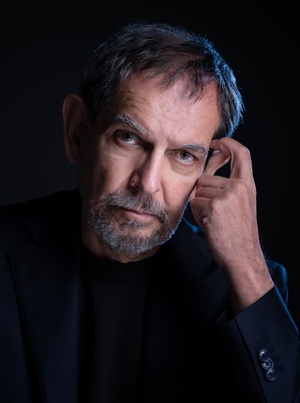 Igor Sibaldi is a bestselling, award-winning Italian author, philosopher, and scholar of religion. His books have sold more than 600,000 copies and been translated into many languages; among his long-selling titles are “The Invisible Teachers” and “The Book of Angels.” His more than 3,000 lectures have reached hundreds of thousands of people in person around the world; his talks have been viewed over 24 million times on YouTube, and he appears regularly on radio and television.
L’Idea Magazine: Your books, translated into four languages, have sold more than 600,000 copies in Italy to date. What do you believe makes them so enticing to the readers?
Igor Sibaldi: Early on, I noticed a tendency of mine that I just can’t hold back: discovering an audience that doesn’t exist yet. Many writers target an audience that’s already there—they try to get to know them better, cater to them, court them. I’ve never been able to do that. When I write, or perform on stage, or give lectures, I speak to people’s future—to their best possible future—and I imagine they can reach it in an instant. I speak to their ability to see and overcome problems they don’t yet perceive today, and to their capacity to already desire things that currently seem impossible because they are too wonderful. Sometimes it works: by reading or listening to me, people find new things within themselves, new and exciting interests, and I succeed. Other times I’m overly optimistic, and a book or a show does just okay. But it doesn’t matter: ten or twenty years from now, the audience I was speaking to will exist, and may be they will appreciate me.
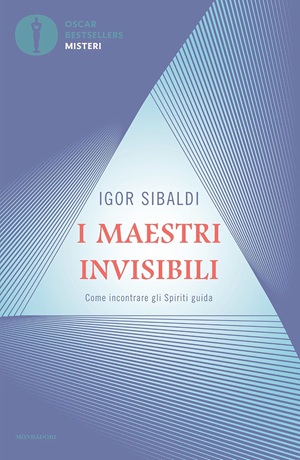 L’Idea Magazine: Among your long-selling titles are “The Invisible Teachers,” in print since 1997. Can you talk a bit about this book?
Igor Sibaldi: Things went very well for me with The Invisible Teachers. “Who knows if they’ll understand?” I used to think during the editing. And the first printing of 10,000 copies sold out in a week. In the book, I explained that everyone has an area in their mind where time does not exist: there, the future is already present, and the past is still present. Therefore, in that area, each of us knows things we don’t yet know, and can make up for mistakes made even a long time ago. That area of the mind is easy to reach: all it takes is a bit of imagination, clarity, joy, and inner control. In the book, I teach how to do it. Many have spoken about it over the past millennia: the Sacred Scriptures, Dante in the Divine Comedy, Carl Gustav Jung, W.B. Yeats. In 1997, very few people in Italy knew anything about it, thinking it was nothing more than poetic fantasy or mythology.
L’Idea Magazine: Your thousand-page novel “Russia Does Not Exist” was hailed by critics in the tradition of Tolstoy. What is the main topic of this novel? You are mainly an essayist and a translator; why a novel?
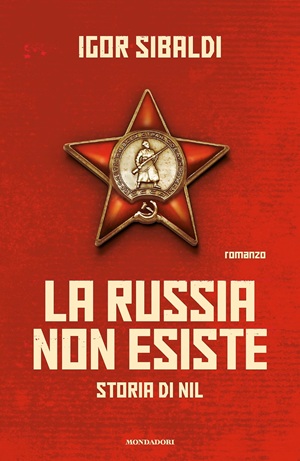 Igor Sibaldi: I don’t know if I am mainly an essayist: all my essays are written like stories of exploration and discovery. Of course, there is a big difference between writing an essay and writing a novel: the author of an essay wants to be right, wants people to think like him/her; the author of a novel, on the other hand, simply discovers—he or she narrates many characters, each of whom thinks something different and perhaps believes to be all right. Thus, someone who writes novels can say more things than someone who writes essays. In Russia Does Not Exist, there are several hundred characters (250 of whom actually existed). It is the story of Nil, who, in 1919 at the age of nine, is left alone in central Russia during the civil war; he becomes a vagabond, a small, fierce delinquent, and meets wonderful people as well as delinquents worse than himself. At twelve, he becomes an informant for the terrible Soviet police, and he makes a career in the police force: he is very handsome, charming, gentle in nature; in an atrocious world, he continues to look in everyone for something beautiful, some desire for authentic happiness; and he has many romantic adventures and a few great loves. At twenty-five, he is the favorite of powerful men and women; even Stalin finds him likable. Then, in 1941, in battle, he is taken prisoner by the Germans; and in Germany too, he makes a career: he enters the so-called Russian Liberation Army, a military formation of prisoners of war who wanted to fight against Stalin. All historians speak ill of that army of collaborators, but Nil meets splendid people there as well. In Germany, he witnesses the end of the war, the disaster of his Liberation Army; and he saves himself, escaping to France. It is a novel about that most important and prodigious thing called the will to live.
L’Idea Magazine: Working from the original Greek and Hebrew, you translated the Gospel of John and Genesis. What made you decide to undertake such a difficult task? After you completed your translation, have you had the opportunity to compare it with other existing translations, and what are your observations on that?
Igor Sibaldi: I really love things I don’t understand: as soon as I try to understand them, they guide me toward wonderful discoveries. So, as a child, I didn’t understand why God had dedicated only seven days to the creation of the universe, why He had wanted to wipe out humanity with the Flood, and so on. At forty, I decided to start understanding it: I abandoned my career as a scholar of Russian literature and explored the ancient Hebrew language. Out of that came two volumes, one of 500 pages, the other of about 300: a translation and commentary of the first twenty chapters of the Book of Genesis, with many digressions. Meanwhile, I tried to understand the Gospel of John by translating it from the ancient Greek original; out of that came a book published in 2003, The Secret Code of the Gospel, which is also reprinted every year, up to this day. The difference from standard translations is huge, both in the case of Genesis and in the case of the Gospel: for instance, Adam, in the original text of Genesis, is not a male and Eve is not a woman; Cain is not an evil shepherd; no one dies in the Flood, and so on. In the Gospels, the verse of the most famous prayer, “give us this day our daily bread,” in the ancient Greek text of Matthew and Luke is “give us today our food from the otherworldly realm.” It is very exciting: one discovers an ancient mindset that still has so many new things to teach us. 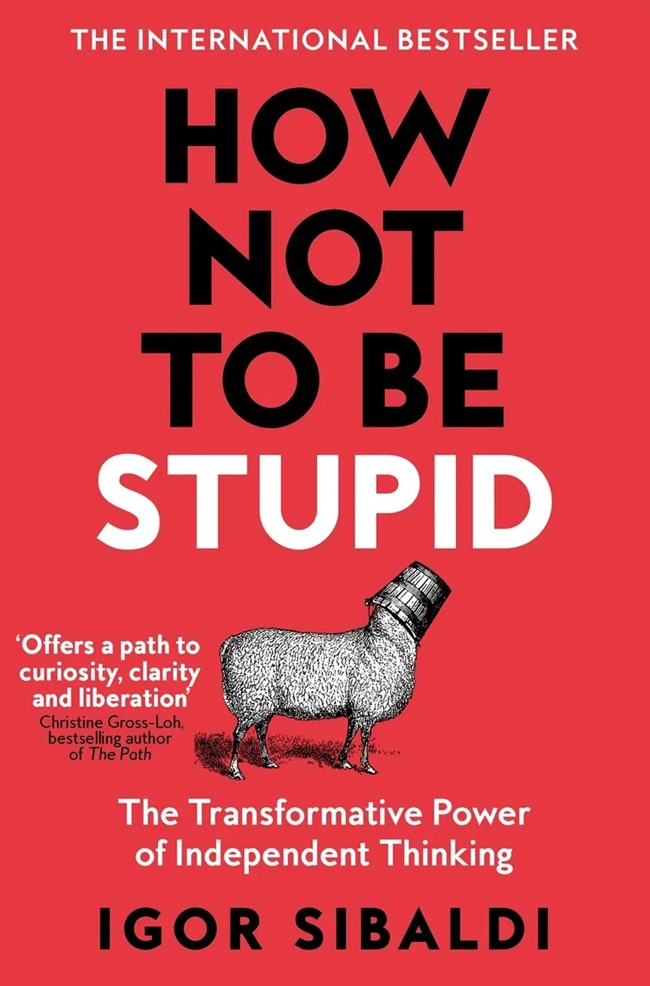
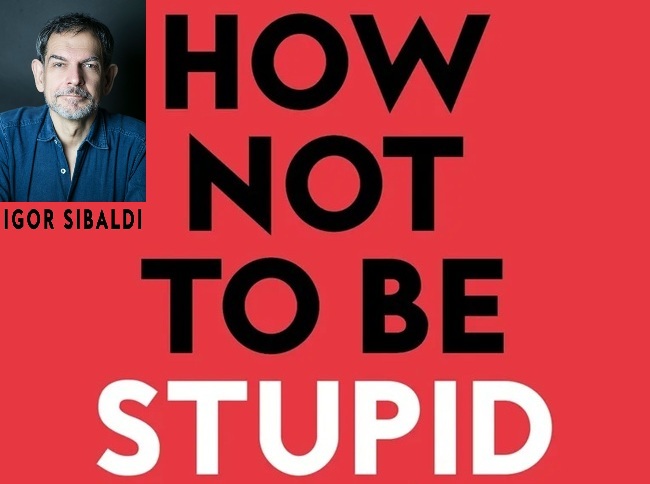
L’Idea Magazine: Your international bestseller, “How Not To Be Stupid,” was published in the US on November 3rd. Let’s talk about that for a while. Why does “stupid” come from stupeo, “I stay still, I am stuck”?
Igor Sibaldi: I think it is a fundamental psychological discovery of the ancient Romans: there are people who have intelligence, talents, sensitivity, deep affections, but fail to let even themselves know it, because they are stupid. Not silly, not dull, not ignorant: just stupid, which in Latin meant “blocked.” In my book, I describe—in the most entertaining way I can—why, how, and in what ways one can be stupid (and everyone is stupid in something, and no one is stupid in everything) and how to break free from one’s own stupidity. In the book How Not to Be Stupid, I also devote ample space to the great mystery that everyone carries within: what is truly what each of us calls “I”? It is a question that is still wide open in psychology, and I explain to readers how to explore it and how many surprises await us within our “I.”
 L’Idea Magazine: Your book traces English words back to Latin. What do those old roots still say about the way we think today?
Igor Sibaldi: Words are our main tool for understanding the world (even numbers are words). And when we use a tool, it is useful to know what it serves for and what it does not serve for: it is the same with the words we say or with which we think. Every word has a precise meaning, which can be discovered through its centuries-old or millennium-old history; and this is very important: in my opinion, if we know how to describe them with precision, our problems easily become solvable in 90 percent of cases. And the remaining 10 percent requires only even more precise words. Often, to discover the true meaning of an English word and use it better, one needs to go back to Latin; other times, to ancient Germanic languages, ancient Greek, or even Sanskrit. Some years ago, it was a complicated task. Today, with AI, it is an instructive, simple, and extremely interesting game to learn.
L’Idea Magazine: By the age of four, your book says, we already know how it feels to be called stupid – as a warning, a diagnosis, a verdict. What does that early word do to the way we think as adults?
Igor Sibaldi: That word, as we were saying, is useful, especially if one knows precisely what it means. The phrase “you are stupid,” on the other hand, is a crime: it sounds like a sentence, or like a spell. If, as children, we are told “you did a stupid thing,” we can fix it by doing something better. But if someone says to a child, “you are stupid,” how is the child supposed to get through it? Being is different from doing, or from having. One is what one is and cannot change! Then an inner struggle begins for the child to escape the influence of that “you are stupid.” Winning this struggle is always hard. And if one loses it, one remains trapped by a sense of guilt, by the feeling of being flawed and not deserving success.
L’Idea Magazine: You state in the book that “’stupid’ is a conventional word”. Could you explain what you mean by that?
Igor Sibaldi: Conventional words are those we use simply because so many others use them, without stopping for a moment to reflect on what they mean. These words are very numerous, and they often appear in contexts that would require us to make important decisions: conventional words like “politics,” “war,” “freedom,” and for many even the word “love” is conventional… These words urgently require clarification, if we want to have control over our mind and our will.
 L’Idea Magazine: Considering the international political situation, could you explain this line from the book: “The other kind of stupidus in respect of Authority is the fanatic, whose behavior is as absurd as it is predictable.”?
Igor Sibaldi: A fanatic (which in ancient times was a religious term) is a person so fascinated by someone else’s power as to silence themselves, stifling their own thoughts and their most reasonable needs. They place themselves at a leader’s disposal blindly. They are predictable, because in order to know what they will do it is enough to know what their leader wants; yet the existence they lead is an absurd rejection of their own problems and of their own freedom. It happened often in the past; but that it continues to happen even today, with all the means we have to be informed, intelligent, and even brilliant (today anyone can become a genius, if they want to), is very sad.
L’Idea Magazine: Are you already working on other projects or books?
Igor Sibaldi: Yes, many. But I never talk about them in advance.
L’Idea Magazine: If you had to meet someone from the past, anyone you would like, who would he or she be? What would you like them to tell you and what would you tell them?
Igor Sibaldi: Of course, there are many writers, poets, artists, and philosophers from the past whom I would like to meet, but I know from personal experience that a writer, poet, artist, or philosopher is less interesting than their works. There are some saints or prophets I would like to meet, too; but saints and prophets usually have a bad temper. All things considered, I would really like to chat a bit with Marlene Dietrich. She was a well-mannered person, and I know she had an extraordinarily strong character, which shows a little in her films, and which enchanted everyone who met her. I would gladly ask her for some advice. 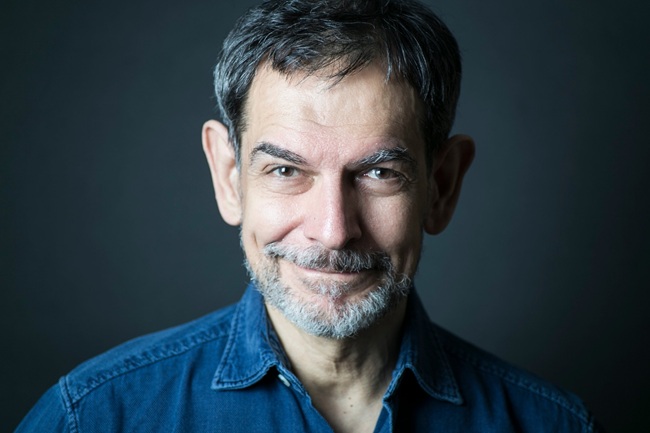
L’Idea Magazine: Do you have any secret wishes?
Igor Sibaldi: Yes. And they are important precisely because they are secret. If I don’t talk about them, they grow, change, and become a little more precise every day until they begin to come true.
L’Idea Magazine: We thank you for your time and your explanations. Do you have a message for our readers?
Igor Sibaldi: Yes, I do: please give importance to this simple question, ‘What do you REALLY like?’ It’s simple, yet it requires courage, time, and self-trust. It’s a guiding question that sets so many changes in motion.