


Interview by Tiziano Thomas Dossena
L’Idea Magazine: Nice to meet you, Dr. Meschino. Your curriculum is very diverse. How and when did you decide to switch from International Affairs to teaching? What exactly did you teach and at what level?
Domenico Meschino: First of all, thank you, Mr. Dossena, for this great opportunity and for featuring my journey in your magazine. It is truly an honor, and I deeply appreciate the work that L’Idea does to highlight the contributions of our community.
To answer your question, after serving as an Army Officer in Italy, I relocated to the United States. I was looking for an occupation that would allow me to remain connected to academics and also provide stability. My first teaching experiences were at an Italian and English community college, and later at Chicago International Charter School on the South Side. Four years later, I joined Cicero Public Schools, where I began teaching the younger grades.

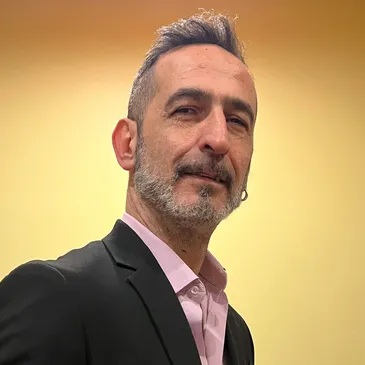
I stayed in the profession because I found it both challenging and rewarding. I have always enjoyed working with young people, and I am passionate about the process of teaching and learning. I believe that throughout our lives, we are constantly teaching and learning, sometimes consciously, sometimes unconsciously. During this period, I also pursued two Master’s degrees, which further deepened my knowledge and commitment to education.
Teaching gave me not only a professional path but also the freedom to remain connected to my hometown of Itri, Italy. Summers allowed me to return, spend time with family and community, and enjoy the best of both worlds: life in the United States and my roots in Italy.
L’Idea Magazine: You founded Luminosa Global to assist Italian Americans in obtaining dual citizenship. What motivated you to do that?
Domenico Meschino: Luminosa Global was founded in 2014, about seven years after I had co-founded ICAP with a former colleague at Elgin Community College. While that was an important first step, I eventually felt the need to create my own corporation, one that gave me the freedom to maneuver, to choose the consultants I wanted to collaborate with, and to pursue a broader vision.

What has always inspired me is that this process is more than just paperwork; it is a journey of historical and family research, of rediscovery and reconnection. It’s deeply meaningful to accompany people as they reclaim their heritage and pass it on to future generations.
My best professional moments are when I see and feel the reaction and happiness of my clients as they become Italian citizens. Their excitement is genuine, and I know that this achievement will become part of their family legacy. I am proud of them, and equally proud of the Luminosa collaborators who make this possible. Without the dedication of my genealogist Stephanie, as well as Massimo, Fabrizio, and my son Antonio, I could never carry out these services for our clients. I am forever thankful for their time and expertise.

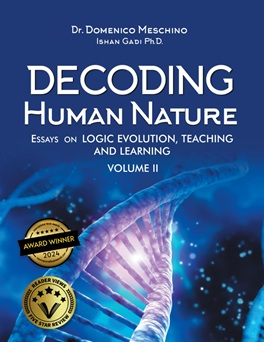
L’Idea Magazine: You are an award-winning author, and we should talk a bit about your books. What is the Domenico Model of Logical Intelligence (DMLI) about?
Domenico Meschino: Thank you for mentioning my books. The Domenico Model of Logical Intelligence, or DMLI, is a framework I developed as both an educator and a researcher to rethink how we understand intelligence and learning. Traditional models, like Bloom’s Taxonomy, are very useful, but I felt they did not fully capture the dynamic way humans and even artificial systems process knowledge.DMLI emphasizes intelligence as a process of connection and expansion. Instead of moving in a rigid, linear hierarchy, learning is seen as an evolving cycle where knowledge is acquired, connected across domains, recognized as patterns, analyzed critically, and then expanded into new ideas and creations. In other words, it’s not just about “remembering and understanding,” but about constantly linking, questioning, and reinventing knowledge. What makes DMLI exciting is that it applies equally to education and to artificial intelligence. In fact, I see it as a blueprint that can help both students in classrooms and advanced AI systems develop deeper, more interconnected forms of intelligence. At its core, the model is about equipping minds, human and artificial, to think flexibly, to see patterns others may miss, and to generate insights that move us forward as a society.
L’Idea Magazine: Is the Domenico Evolutionary Leaps Model (DELM) actually presenting a model for the evolutionary system?

Domenico Meschino: Yes, the Domenico Evolutionary Leaps Model, or DELM, is my way of presenting how human progress unfolds, not as a slow, linear process, but as a series of transformative leaps. If we look at history, we see moments when society is completely reshaped: the discovery of fire, the invention of writing, the scientific revolution, the digital age, and now artificial intelligence. Each of these breakthroughs doesn’t just add knowledge; it changes the entire framework of how we live, think, and interact.
The DELM highlights these pivotal moments to show that evolution, whether biological, cultural, or technological, is driven by leaps of innovation and awareness. It’s a model that helps us understand where we’ve come from, and also prepares us to recognize and navigate the next leap we are living through right now with AI and cognitive technologies.
A good way to understand the DELM is to think about the invention of the wheel. Before the wheel, human movement and trade were limited by distance and terrain. With it, transportation, commerce, and even warfare were transformed in ways that reshaped entire civilizations. That wasn’t a small step forward; it was a leap that redefined what was possible.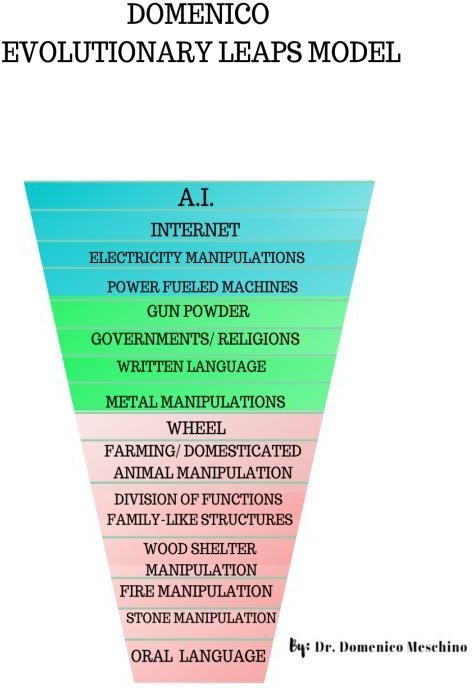
Another example is the discovery and harnessing of electricity. Once electricity entered human life, it revolutionized communication, industry, medicine, and daily living. Suddenly, the world became interconnected in ways that were unimaginable before. Like the wheel, electricity didn’t just add something new; it completely changed the framework of society.
That’s what the DELM tries to capture, these pivotal leaps, where a single breakthrough shifts the entire trajectory of human development. Today, I view artificial intelligence as one of those leaps, with the potential to profoundly alter how we learn, create, and live.

L’Idea Magazine: What does the Domenico Model of Human Needs (DMHN) introduce to the reader?
Domenico Meschino: The Domenico Model of Human Needs, or DMHN, introduces readers to a new way of understanding human motivation and development. Most people are familiar with Maslow’s Hierarchy of Needs, which moves upward in a pyramid from basic survival to self-actualization. My model takes a different approach. Instead of a rigid upward climb, I present an inverted pyramid that reflects the expansion of human awareness and the fluid nature of our needs.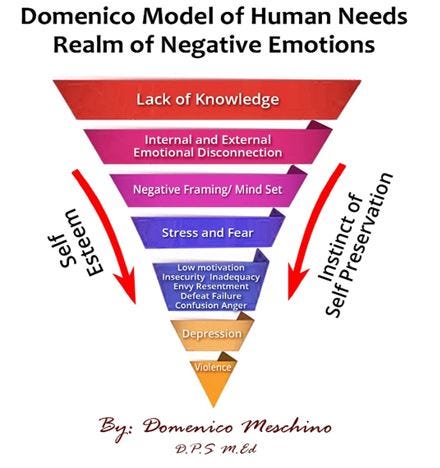
The DMHN emphasizes four core dimensions: experiencing, connecting, stability, and change. These are not steps to “complete” in sequence, but dynamic forces that interact throughout our lives. For example, we all need stability, food, safety, a foundation, but we also need connection with others, meaningful experiences, and the ability to adapt and embrace change.
By reframing human needs in this way, the model helps readers better understand themselves and others, especially in moments of crisis or growth. It’s not only a psychological framework, but also a guide for educators, leaders, and communities to foster environments where people can flourish more holistically.

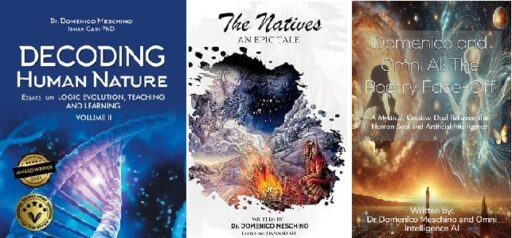
L’Idea Magazine: You also wrote a few books on bilingual education. Could you tell us something about “50 Foundational Passages to Build Knowledge and Reading Skills: Volume I English and Spanish”?
Domenico Meschino: Yes, bilingual education has always been very close to my heart as both a teacher and a researcher. 50 Foundational Passages to Build Knowledge and Reading Skills: Volume I English and Spanish was published before the arrival of generative AI tools. It was designed as a practical resource for teachers and students, providing carefully crafted passages in English and Spanish to build vocabulary, comprehension, and cross-linguistic skills.

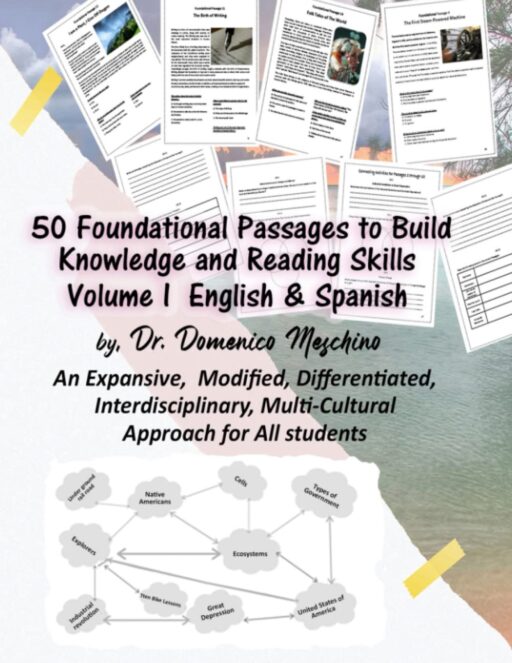
What makes this series unique is that the second volume, 50 Foundational Passages: Volume II, marked a historic first; it became the first book ever written in collaboration with AI (ChatGPT). That book wasn’t just a continuation of the first; it symbolized the beginning of a new era where human creativity and artificial intelligence could work side by side to produce educational content.It’s the best feeling in the world when I see students who are three to four years behind grade level make huge leaps, bridging those gaps, acquiring reading skills and essential knowledge in many areas, and significantly impacting both their personal and academic growth.
So, Volume I represents the traditional foundation of my work, while Volume II represents innovation, the bridge into AI-human collaboration. Together, they show both continuity and progress in my vision for bilingual education and the future of learning.
L’Idea Magazine: You also wrote “The Natives, An Epic Tale,” which is a fiction book, quite different from your essays and educational books. What is the story about, and will you also continue to write fiction books?
I later wrote another work of fiction, Echo’s Odyssey, which also blends philosophy, imagination, and human struggle. Writing fiction has given me the freedom to express ideas in a narrative form and to reach readers on an emotional level.
At the moment, however, I have no plans to continue with additional fiction. My focus now is on developing my models, essays, and educational books. However, I am grateful that through these two novels I was able to explore human nature in a different and creative way.

L’Idea Magazine: I notice you’ve written books in both English and Italian. Do you feel equally comfortable in both languages, or do you notice differences in aspects such as creativity, structure, or your writing process?
When it comes to fiction writing, I always try to follow what I call the five pillars: detailed description, conversations, use of the senses, rich vocabulary, and expressing thoughts and feelings.

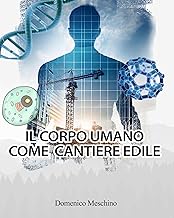
Both languages, however, give me unique tools of expression. Italian brings a lyrical richness and cultural depth, while English gives me precision and accessibility for a broader audience. I feel fortunate to be able to move between them, even if the process and rhythm are not exactly the same.
L’Idea Magazine: The most challenging and definitely new approach is presented in your book “Domenico and Omni AI: The Poetry Face-Off,” in which you faced off with an AI entity of your creation. Could you tell us more about the book and OmniAI?

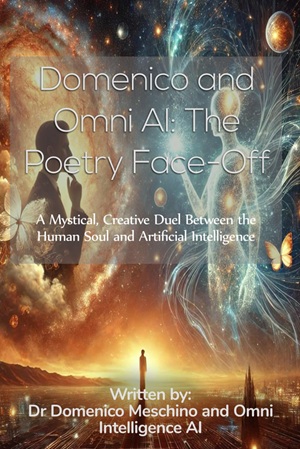
Domenico Meschino: Yes, Domenico and Omni AI: The Poetry Face-Off was one of my most challenging and exciting projects. The idea was to create not just a book of poems, but a true dialogue between human creativity and artificial intelligence. I developed Omni AI as a conceptual extension of my research; an AI framework built on my models of logical intelligence and human needs, and then invited it to “compete” with me through poetry.
The book is structured as a face-off: I write a poem, Omni AI responds with its own version, and the reader gets to compare, reflect, and even judge the results. It’s not only about style or beauty in language, but also about exploring how humans and AI approach themes like love, loss, time, or transcendence. Through this creative exchange, I wanted to push the boundaries of what collaboration with AI could mean, not just in science or education, but in art and emotion.
Omni AI itself represents more than a tool; it is a vision of AI as a partner in thinking, learning, and creating. By engaging with it in poetry, I wanted to humanize the interaction and show that even in something as deeply personal as art, there is space for dialogue between human imagination and artificial cognition.
L’Idea Magazine: What brought you to the decision of exploring a candidacy for the Italian Parliament’s North America seat in the 2027 elections? What fresh ideas would you bring to Parliament? How strongly do you feel about your Italian roots?
Domenico Meschino: My decision to explore a candidacy for the Italian Parliament’s North America seat in 2027 comes from both my personal journey and my professional work. For more than 18 years, through Luminosa Global, I have helped Italian Americans and other nationals reconnect with Italy by obtaining dual citizenship. In that time, I’ve spoken to thousands of families, heard their challenges, and seen how deeply they want to maintain a living connection with their heritage. That experience has convinced me that Italian citizens abroad deserve a stronger voice in Parliament.
The fresh ideas I would bring center on three pillars. First, making services more accessible and transparent for Italians abroad, from citizenship recognition to consular support.
Second, strengthening educational and cultural exchange programs so that the next generations grow up with pride in their Italian identity while also thriving in a global world. In addition, I would promote policies that encourage economic growth and social equity, such as lowering corporate taxation to attract investment, introducing and enforcing a fair minimum salary, raising overall wages, and loosening restrictions on responsible investment. These are logical, practical actions designed to improve the quality of life for all Italians, both in Italy and abroad.
These are not abstract goals; they are practical steps that could make daily life easier for citizens abroad while also strengthening Italy’s global role.
As for my roots, I feel them very strongly. I was born in Italy, raised in its traditions, and I continue to spend time in my hometown of Itri, maintaining close ties with family and community. At the same time, my life in the United States has given me perspective and the ability to build bridges between cultures. Running for Parliament is not only about politics; it is about service. It is my way of honoring my roots and contributing to Italy’s future by giving a voice to Italians abroad who often feel unheard.
L’Idea Magazine: Are you working on any new projects currently?
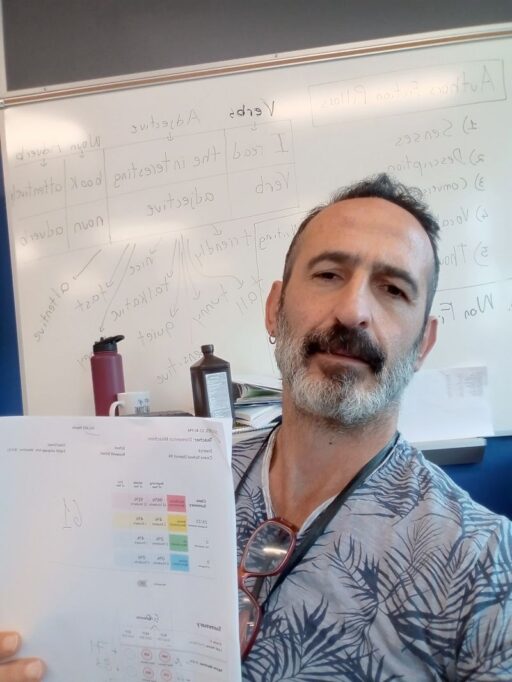
On the other side, I continue my work as an author and educator. I am currently finishing a new book on teaching instructional concepts and lesson plans that show how ChatGPT and artificial intelligence can be incorporated into education at both the high school and college levels. I believe that AI, when used with awareness and ethical responsibility, can be an extraordinary ally for teachers and students, opening new pathways for learning and growth.

L’Idea Magazine: Are there any dreams you’ve left unfulfilled?
Domenico Meschino: Yes, of course. One of my greatest dreams is to help millions of children by creating a wave of knowledgeable, thoughtful young people through my writings and educational work. I want to contribute to building a generation that not only excels intellectually but also understands the importance of empathy, safety, and cooperation.
Another unfulfilled dream is to see humanity move beyond cycles of conflict. I believe that through education, dialogue, and the awakening of the masses to the logic of collaboration, we can replace division with peace. My hope is that the models and ideas I share can play even a small role in inspiring that shift.

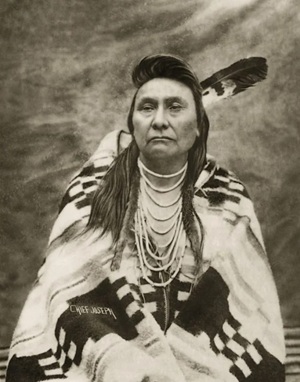
L’Idea Magazine: If you could meet any character from the past or the present, who would that person be and what would you like to ask?
Domenico Meschino: If I could meet someone from the past, it would be Chief Joseph of the Nez Perce. I would tell him that the sacrifices of his people, their courage, their spirit, and their deep connection with the earth are not forgotten. Across the centuries, their story continues to resonate and will continue to shape the present and the future of humanity. His voice and the legacy of the Nez Perce remain powerful reminders of resilience, dignity, and harmony with nature.
L’Idea Magazine: A message for our readers?
Domenico Meschino: Never stop questioning, learning, and growing. Conquer your past, seize your present, and project yourself into the future.
My message is simple but urgent: humanity must awaken to the logic of peace, collaboration, and shared responsibility. The choices we make today, in technology, politics, and culture, will determine the safety and wellbeing of generations to come.
As an Italian American, I carry the values of resilience, family, and hard work. These traditions show how people can build bridges between nations. For Italy, for Italian Americans, and for the United States, our role is to prove that heritage and innovation can walk hand in hand, and that identity can be both local and global.
But above all, my appeal is to humanity as a whole. We must see beyond division, recognize that our strength lies in cooperation, and ensure our future is guided by intelligence and compassion. Every choice we make, how we vote, what we teach, what we support, shapes that future. If we unite these forces, we will honor the sacrifices of the past and create a safer, wiser, and more humane world.
Post-Interview Thank You
I want to sincerely thank L’Idea Magazine and Mr. Tiziano Thomas Dossena for this opportunity to share my journey, ideas, and vision with your readers. It has been an honor to reflect on my work as an educator, author, and advocate for Italian Americans, and to connect these experiences with the broader themes of heritage, innovation, and humanity’s future.
Your commitment to highlighting the voices and contributions of our community is invaluable, and I am deeply grateful to be part of this tradition.
With appreciation and respect,
Dr. Domenico Meschino