


Recensione di Maria Teresa De Donato
Coloro che fossero interessati a conoscere la cultura indiana così come vissuta e vista da una normale giovane donna della media borghesia, dotata di un atteggiamento premuroso e amorevole e un approccio pratico e concreto alla vita, ameranno questa pubblicazione.
Il libro inizia con la descrizione di un pujari (sacerdote) che esegue un’abhishekam (bagno) alla dea nel santuario, davanti a tre pilastri neri, mentre la congregazione canta preghiere.
Una domanda innocente posta da una bambina che vuole sapere “dove si trova la dea”, visto che le uniche cose che si presentano ai suoi occhi sono proprio le tre colonne nere, riporta alla mente dell’Autrice esperienze e pensieri simili a quelli avuti durante la sua infanzia, incluso anche il momento imbarazzante quando lei stessa aveva posto una simile domanda, pur ammirando la grande devozione e fede che le persone hanno in Dio. L’Autrice, tuttavia, e per sua stessa ammissione, è più propensa a vedere “dio” nelle brave persone, in coloro che sono pronti “a dare una mano in caso di pericolo o difficoltà” (p. 6) e che sembrano essere inviati da Dio piuttosto che vedere quest’ultimo in cose inanimate.
Da quel momento in poi un ricordo dopo l’altro riaffiora nella sua mente: l’uomo con le borse “piene di verdure e provviste” (p. 6) che, tornando a casa, si fermava regolarmente a pregare il Dio Sole; le processioni religiose che si svolgevano lungo la strada dove le persone trasportavano le statue degli dei e facevano esplodere petardi o mettevano in scena drammi per dimostrare le capacità fisiche e/o la forza degli uomini; come il tutto lasciasse alcuni spettatori stupiti e altri completamente inorriditi (pp. 7, 8); l’avventura o disavventura, a seconda di come la si percepisca, del viaggio in un paesino lontano organizzato da suo padre quando lei era ancora una bambina.
Una volta suo marito aveva noleggiato un furgone, da 12 posti e con autista, per andare con la famiglia e alcuni parenti a una cerimonia di piercing delle orecchie. Arrivati davanti al cancello di casa loro, avevano notato che il van era molto vecchio e che molte sue parti erano arrugginite. Durante il tragitto, erano tanti i rumori che il van produceva quanto grande era l’incertezza dei passeggeri sul fatto che potesse portarli a destinazione. All’improvviso il furgone si era fermato in una zona lontana dal centro abitato perché … il gasolio era finito.
Tra l’altro, nonostante il furgone disponesse solo di 12 posti, 20 persone erano riuscite a salire a bordo, accalcandosi, e a tenere i bambini seduti sulle gambe. La vettura era comunque riuscita a portarli a destinazione grazie a un signore che, passando lì per caso a bordo di un motorino, aveva accompagnato il conducente del van al distributore di benzina più vicino e riportato il van al punto in cui era parcheggiato.
Le vacanze estive trascorse a casa dei nonni in paese; le ingiuste punizioni ricevute a scuola e, poi nella Vita, anche sul posto di lavoro; tutti i sacrifici fatti dai suoi genitori per dare a lei e ai suoi fratelli la migliore educazione e le migliori condizioni di vita possibili, sono tutti ricordi che, riaffiorandole alla mente, sottolineano la ricchezza in termini di esperienze, avute prima da bambina, poi da adolescente e da giovane adulta e gli insegnamenti e le lezioni che ha imparato, nonché il fatto che le cose più preziose nella nostra esistenza umana che valgano la pena di essere vissute siano in realtà pochissime.
Prendere le cose come vengono potrebbe aiutarci ad adattarci alle nuove situazioni che ci si presentano nella nostra vita e a trarne il meglio; accettare il passare del tempo e, conseguentemente, l’avanzare della nostra età, come un privilegio piuttosto che come una maledizione, evitando di essere eccessivamente preoccupati o addirittura stressati o depressi perché non sembriamo più così giovani come vorremmo, è altrettanto fondamentale per mantenere la nostra sanità mentale e il nostro equilibrio nella vita.
Accettare e apprezzare, con amore e gratitudine, anche le cose più piccole che otteniamo nella vita è fondamentale. Come afferma l’Autrice: “Oggi viviamo nell’era cibernetica… c’è una concorrenza spietata in tutti i campi di attività. C’è anche una continua corsa al successo per vincere, per raggiungere la vetta della scala sociale… ” (p. 37) Il risultato è che molti tra noi non riescono più a trovare appagamento e gioia nella Vita poiché sono sempre alla ricerca della prossima meta da raggiungere. “…la nostra mente continua a vagare da un obiettivo all’altro per tutta la durata della nostra esistenza… Non riposiamo mai in pace né sperimentiamo mai la tranquillità della mente e l’appagamento.” (pag. 38)
Saggiamente, l’Autrice ha capito che dare è meglio che ricevere e che rendere felice qualcuno, semplificandogli la vita con qualcosa di utile, potrebbe portare felicità a lui e a noi. “Questo libro è il risultato di quel desiderio.” (pag. 97)
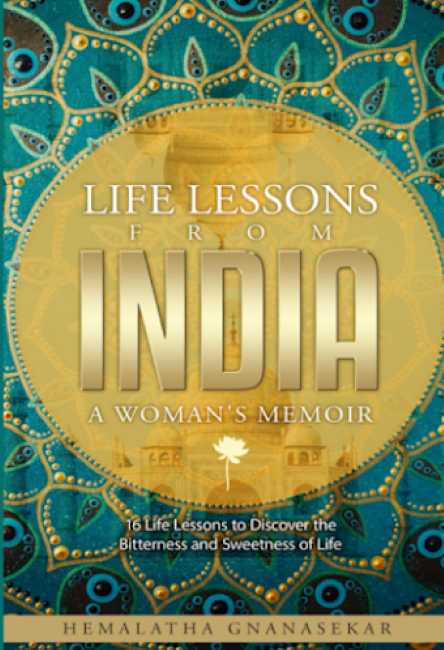
Lezioni di vita dall’India – Memorie di una donna è un libro scritto con un atteggiamento onesto e premuroso verso tutte le persone da qualcuno che ha sofferto e imparato le lezioni più importanti ed è pronto a condividere con i suoi lettori le sue esperienze senza restrizioni né vergogna.
Lo stile di scrittura di Hemalatha è semplice ma accattivante. I suoi messaggi sono universali e raggiungono direttamente il cuore.
Consiglio questo libro a tutti, e ancor di più a chi potrebbe essere affascinato dalle culture straniere e dalle biografie.
Life Lessons from India – A Woman’s Memoir by Hemalatha Gnanasekar
Review by Maria Teresa De Donato
Those interested in learning about Indian culture as experienced and seen by an ordinary middle-class young woman with a caring, loving attitude and a practical, down-to-earth approach to life will love this publication.
The book begins by describing a pujari (priest) performing an abhishekam (bathing) to the goddess in the sanctum before three black pillars while the congregation chants prayers.
An innocent question posed by a child who wants to know “where the goddess is,” given that the only things that appear to her eyes are the three black columns, brings to the Author’s mind experiences and thoughts similar to those she had during her childhood, including the embarrassing moment when she had asked a similar question, despite admiring the great devotion and faith people have in God. The Author, however, and by her admission, is more inclined to see “god” in good people, in those who are ready “to lend a hand in case of danger or difficulty” (p. 6) and who seem to be sent by God, rather than seeing the latter in inanimate things.
From that moment on, one memory after another resurfaces in her mind: the man with bags “full of vegetables and provisions” (p. 6) who, on his way home, regularly stopped to pray to the Sun God; the religious processions that took place along the road where people carried statues of the gods and set off firecrackers or staged dramas to demonstrate men’s physical abilities and/or strength; how it all left some spectators amazed and others completely horrified (pp. 7, 8); her adventure or misadventure, depending on how you perceive it, of the trip to a distant village organized by her father when she was still a child.
Once, her husband had rented a van with 12 seats and a driver to take his family and some relatives to an ear-piercing ceremony. When it arrived at the gate of their house, they noticed that the van was very old and that many of its parts were rusty. During the journey, the van made so many noises that there was great uncertainty among the passengers about whether it would take them to their destination. Suddenly, the van stopped in an area far from the town because… it had run out of diesel.
Among other things, although the van only had 12 seats, 20 people, squeezing in together, managed to get on board and keep the children sitting on their laps. However, the vehicle eventually took them to their destination thanks to a gentleman who, passing by chance on a moped, had taken the van driver to the nearest gas station and brought him back to where the van was.
The summer holidays spent at the grandparents’ house in the village; the unjust punishments received at school and, later in life, also in the workplace; all the sacrifices made by her parents to give her and her siblings the best possible education and lifestyle are all memories which, resurfacing in her mind, underline the richness in terms of experiences, she had first as a child, then as a teenager and young adult and the teachings and lessons she has learned, as well as the fact that the most precious things in our human existence that are worth living are very few.
Taking things as they come could help us adapt to new situations that arise in our lives and make the best of them; coming to terms with the passing of time and, consequently, with our aging and seeing it as a privilege rather than a curse, avoiding being excessively worried or even stressed or depressed because we no longer seem as young as we would like to, is equally fundamental to maintaining our sanity and our balance in life.
Accepting and appreciating even the most minor things we get in life with love and gratitude is vital. As the Author states: “Today we live in the cybernetic age… there is ruthless competition in all fields of activity. There is also a continuous race for success to win, to reach the top of the social ladder…” (p. 37). The result is that many of us can no longer find fulfillment and joy in life because we are always looking for the next goal to reach. “…our mind continues to wander from one goal to another throughout our existence…We never rest in peace and never experience the tranquility of mind and contentment.” (page 38)
Wisely, the Author understood that giving is better than receiving and that making someone happy by simplifying their life by doing something useful could bring happiness to them and us.
“This book is the result of that desire.” (page 97)
Life Lessons from India – Memoirs of a Woman is a book written with an honest and caring attitude towards everyone by someone who has suffered and learned the most important lessons and is ready to share her experiences without restrictions nor shame with her readers.
Hemalatha’s writing style is simple but captivating. Her messages are universal and reach the heart directly.
I recommend this book to everyone and even more so to those readers who might be fascinated by foreign cultures and biographies.